Tankless Water Heaters Surrey BC | Installation | Accolade
Tankless Water Heaters Surrey BC

Tankless Water Heater Installation & Service in Surrey, BC

Accolade Heating & Air Conditioning plans tankless water-heater installation and replacement around the household’s simultaneous hot-water demand, incoming-water temperature, gas capacity, venting, condensate, recirculation and service access. If you already own a tankless unit, this page also points you to the correct repair or maintenance path without mixing those search intents.

Red Seal Gas Fitting Flow & Temperature-Rise Sizing Written Installation Scope Delta-Based · Serving Surrey
4.7/5
★★★★★ 80 Google reviews

Review evidence supplied July 31, 2026. Feedback frequently mentions transparency, explanations, knowledge and attention to detail.

Supplied Jul 31, 2026
Primary Tankless Owner

This page is for tankless selection, installation and replacement.

Accolade’s broader water heater services page compares tank, tankless and heat-pump systems. This URL is the dedicated owner for homeowners already considering a tankless water heater or replacing an existing on-demand system.

If the existing tankless unit has an active fault, no hot water or recurring error code, use the dedicated tankless water heater repair page instead of treating every service request as an installation lead.

  • New tankless installation for a suitable property
  • Storage-tank to tankless conversion planning
  • Replacement of an existing tankless system
  • Recirculation and long-piping-run planning
  • Gas, venting, condensate and service-access review
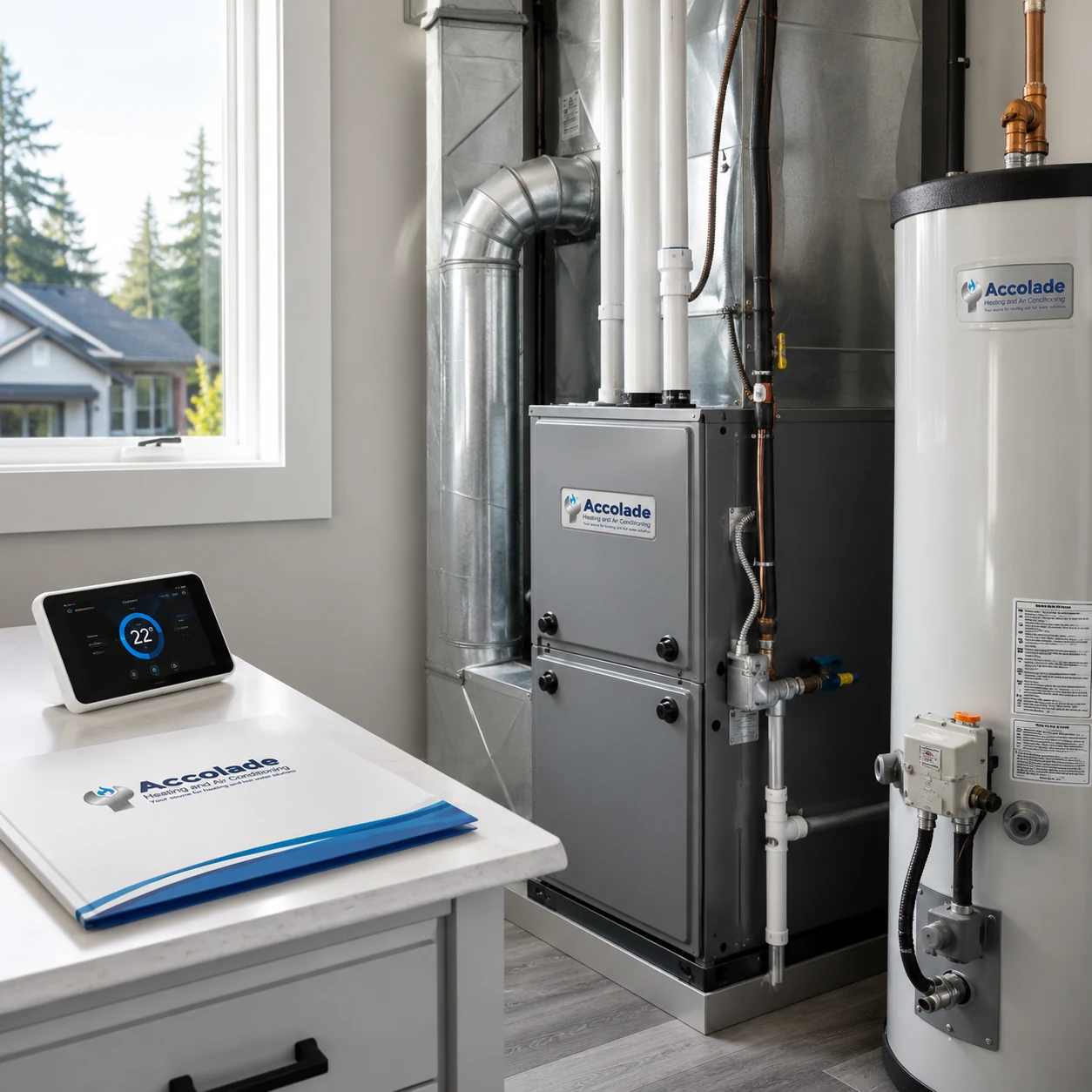
Mechanical room being assessed for a Surrey tankless water-heater project
Is Tankless a Good Fit?

A tankless unit has to match both demand and the existing installation.

“Endless hot water” is only accurate while the unit can meet the required flow and temperature rise. The installation also has to support the gas, venting, condensate and electrical requirements of the selected equipment.

Household Demand

Count fixtures that may run at the same time and consider showers, tubs, laundry, dishwashing and high-flow fixtures. Peak simultaneous demand matters more than household size alone.

  • Simultaneous fixture flow
  • Required hot-water temperature
  • Incoming-water temperature
  • Peak-use patterns

Existing Gas & Venting

A tank-to-tankless conversion is not always a simple appliance swap. Gas piping, venting route, combustion-air provisions and the existing mechanical-room layout may need to change.

  • Gas supply capacity
  • Vent type and termination
  • Combustion-air requirements
  • Clearances and service access

Condensate & Recirculation

Condensing tankless systems require condensate management. Homes with long hot-water piping runs may also benefit from a properly designed recirculation strategy.

  • Condensate drainage route
  • Neutralizer requirements where applicable
  • Recirculation layout and controls
  • Wait-time expectations at distant fixtures
Homeowner reviewing tankless water-heater performance and service options
Installation vs Replacement

The scope changes depending on what is already in the home.

Replacing an existing tankless unit

The new model still needs to be checked against current demand, gas supply, venting, condensate, controls, piping and manufacturer requirements. “Same location” does not automatically mean “same scope.”

Converting from a storage tank

The project may involve new venting, altered gas piping, electrical work, condensate drainage, wall mounting and changes to hot-water piping.

Adding recirculation

Recirculation can reduce wait time at distant fixtures, but the piping configuration, controls, return path and operating strategy need to be understood first.

Choosing another water-heating type

If tankless is not the best fit, compare water heater options before committing to a conversion.

Tankless Installation Scope

What a useful tankless quote should explain

The equipment is only one part of the project. The quote should make the supporting work and assumptions visible before approval.

Scope item What should be clear
Equipment sizing Simultaneous flow, temperature rise, fuel input and why the selected capacity is suitable for the household.
Gas supply Whether existing piping and supply conditions are suitable, and what gas work is included if changes are required.
Venting Vent material, route, termination, penetrations and any changes from the existing installation.
Condensate Drainage route, neutralizer requirements where applicable and assumptions about nearby drainage.
Electrical Power, receptacle, controls or circuit work required by the selected model.
Recirculation Whether it is included, how it is controlled and what improvement in wait time can reasonably be expected.
Permits & regulated work Which permits, inspections or regulated-trade responsibilities apply to the actual scope and which party is handling them.
Removal & commissioning Old-equipment removal, startup checks, settings, owner handoff and relevant documentation.
Technical Safety BC has documented incidents where water-heater replacement with altered venting required an installation permit, reinforcing why permit responsibility should be confirmed from the actual scope rather than advertised as universally included.
Tankless vs Other Options

Choose tankless because it fits the property—not because it is automatically “better.”

Tankless Water Heater

Good fit where on-demand hot water, wall-mounted equipment and the property’s gas/venting conditions make sense.

  • No storage tank recovery cycle
  • Capacity limited by flow and temperature rise
  • Requires model-specific maintenance

Storage Hot-Water Tank

May be the simpler replacement path when the existing location, fuel, venting and household demand suit a storage system.

See the hot-water tank options if a direct tank replacement better matches the property.

Heat-Pump Water Heater

An electric alternative with different room-volume, electrical, drainage and operating-noise requirements.

Review heat-pump water heater options if electrification is part of the project.

Service & Maintenance

Tankless ownership continues after installation.

Maintenance should follow the manufacturer, model, water conditions and usage. An active error code, no-hot-water condition or leak belongs on the repair path rather than being treated as routine maintenance.

Planned Maintenance

Depending on the unit, routine service may include water-side flushing, inlet-filter review, condensate checks, vent inspection and operating checks.

Active Fault

For no hot water, recurring error codes, ignition faults, unstable temperature or shutdowns, use the dedicated repair workflow.

Request tankless repair.

Surrey Water Conditions

Metro Vancouver’s treated drinking water is generally soft, so tankless maintenance should not be written as if Surrey has unusually hard water. Actual water source and manufacturer guidance still matter.

Manufacturer Support

Use the exact model when planning service or replacement.

Manufacturer pages support this tankless owner page with model and brand context; they should not compete for the broad “tankless water heater Surrey” query.

Navien

For Navien tankless and combi equipment context, model families and service planning, see the Navien service page.

Rheem

For Rheem tankless equipment context and related service planning, see the Rheem service page.

Tankless Installation Process

From demand review to commissioned hot water

Review the Existing System

Identify the current water heater, household demand, fuel, gas piping, venting, electrical supply, piping layout and available service space.

Size the Tankless System

Compare simultaneous fixture demand and required temperature rise with suitable equipment capacity rather than choosing by household size alone.

Confirm the Written Scope

Review equipment, gas, venting, condensate, electrical, recirculation, permits, disposal, exclusions and warranty documentation.

Install & Commission

Complete the approved work, follow manufacturer startup procedures, verify hot-water operation and review controls and maintenance considerations.

Qualifications & Scope

Gas credentials should be described for the work they actually cover.

Red Seal Gas Fitting

Relevant to gas-fitting work within the qualification’s scope. The exact gasfitter class and Technical Safety BC certificate should be published only after verification.

Manufacturer Requirements

Installation and commissioning should follow the selected manufacturer’s instructions. Product documentation alone does not prove dealer authorization.

Permits & Inspections

Requirements depend on the actual project. Conversions, altered venting, gas work or electrical changes can affect what regulated work and permits are needed.

Customer Feedback

Positive feedback about Accolade’s service approach

These excerpts are broader customer feedback supplied with the page and are not presented as separate tankless-installation case studies.

Professional, incredibly thorough and educates us every step of the way.
Sarah Reid · Google reviewer
Attention to detail and transparency, as well as dependability each year, has been greatly appreciated.
Rob Ancell · Google reviewer
Tankless Water Heater FAQ

Tankless installation and service questions

How is a tankless water heater sized?

Sizing should account for the fixtures that may run at the same time and the temperature increase required between incoming water and the desired outlet temperature. The selected unit must be able to meet that combined demand under the property’s actual conditions.

Can every storage-tank water heater be converted to tankless?

No. A conversion may require changes to gas piping, venting, electrical supply, condensate drainage, mounting location and hot-water piping. The existing installation should be reviewed before equipment is selected.

Does tankless mean unlimited hot water?

A tankless unit can continue producing hot water while demand remains within its rated flow and temperature-rise capacity. It is not unlimited if simultaneous demand exceeds what the unit can heat.

Why can hot water still take time to reach a fixture?

The heater may produce hot water on demand, but water still has to travel through the piping between the unit and the fixture. Long piping runs can create wait time unless the system uses an appropriate recirculation strategy.

How often does a tankless water heater need maintenance?

Follow the manufacturer’s instructions for the exact model and adjust for water conditions, usage and installation. Maintenance frequency should not be based on a generic “Surrey hard water” rule because Metro Vancouver’s treated supply is generally soft.

Should I repair or replace an existing tankless unit?

Compare the diagnosed fault, overall condition, repair history, parts availability and the supporting work required for a replacement. Do not use age alone as the decision rule. Active faults should first be evaluated through the tankless repair process.

Do tankless installations require permits?

Permit and inspection requirements depend on the actual scope. Gas work, altered venting, electrical changes and conversion from another water-heater type can affect the requirements. The written quote should state who is responsible for applicable permits and inspections.

Which tankless brands can Accolade review?

The site includes service information for Navien, Rinnai and Rheem equipment. Provide the exact brand and model so Accolade can confirm the current installation, service or replacement scope for that unit.

Request Tankless Installation or Service

Start with demand and the existing installation.

Share the current water heater, household demand, model if known, gas or electrical setup, symptoms and whether you are planning a replacement, conversion or service visit.

HVAC service vehicle arriving for tankless water-heater service in Surrey