Existing gas tankless replacement
Replacing an older tankless unit where suitable gas, venting, water and power connections are already present.
- Comparable capacity and location
- Limited piping changes
- Accessible service clearances

A professionally installed residential gas tankless system commonly falls between about $3,000 and $6,500 in the Surrey market, while conversions or high-demand installations can cost more. The useful question is not only the unit price—it is what the home needs for gas capacity, venting, condensate, electrical power and simultaneous hot-water demand.
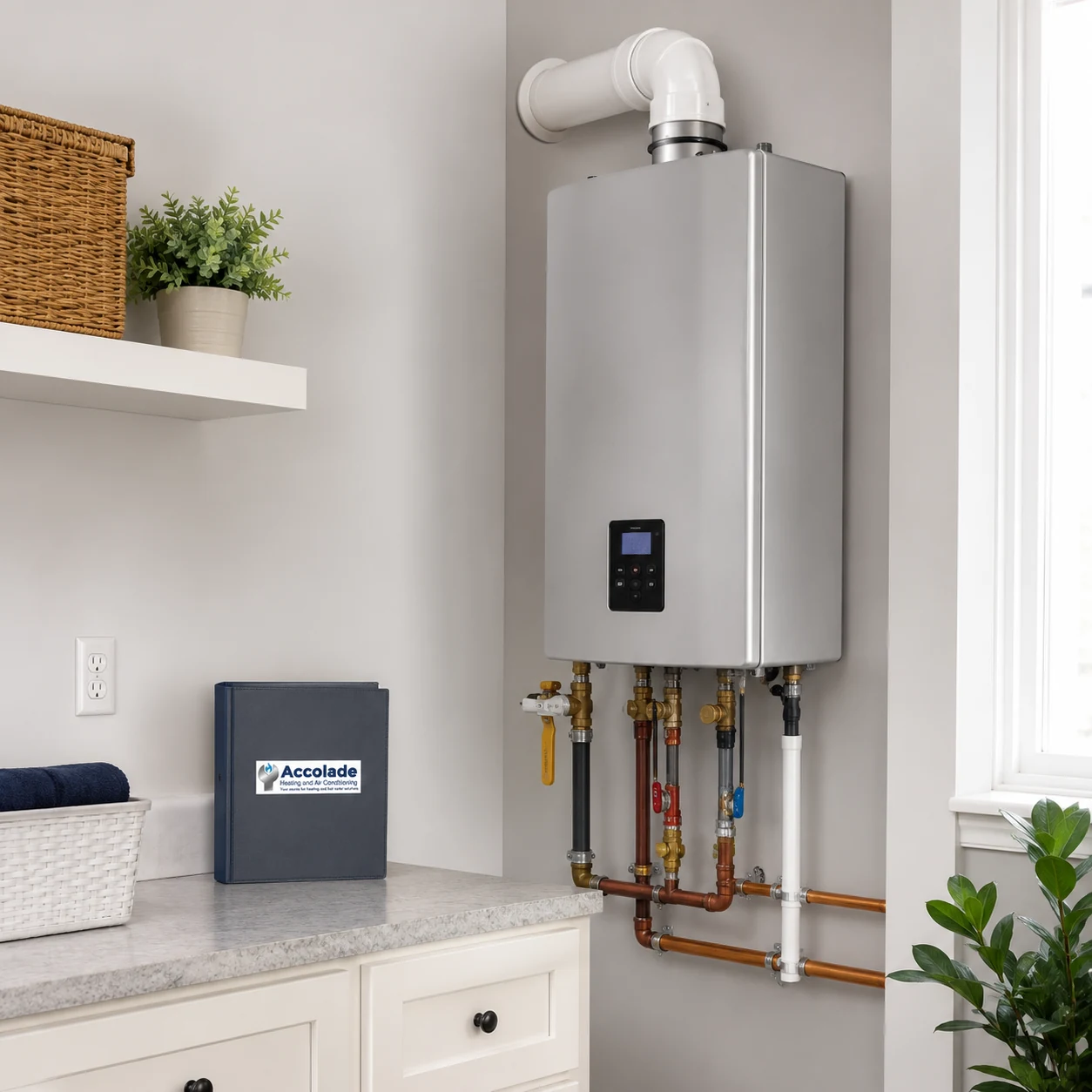
Equipment, labour, access, permits, electrical, gas, venting and existing-system conditions can materially change the final price.
These figures are before financing and any applicable incentives. Taxes, unusual access and major building work can move a project outside the ranges.
Replacing an older tankless unit where suitable gas, venting, water and power connections are already present.
A common conversion range when the home needs new venting, condensate handling and connection changes.
Higher-flow equipment or extensive gas, venting, recirculation and access work can move the project higher.
Small point-of-use systems can cost less, but whole-home electric tankless may require major electrical capacity and is not suitable for every property.
| Cost factor | Lower-cost situation | Higher-cost situation |
|---|---|---|
| Hot-water demand | One or two simultaneous fixtures | Large household, soaker tub, rain shower or multiple bathrooms |
| Gas supply | Existing correctly sized line and meter capacity | New larger gas line, meter review or regulator work |
| Venting | Short, accessible sidewall route | Long run, roof penetration, difficult clearances or finished-space access |
| Condensate | Nearby drain with suitable routing | Neutralizer, pump or long condensate route |
| Location | Accessible mechanical room | Tight townhome closet, exterior relocation or finished-wall restoration |
| Controls | Standard on-demand operation | Recirculation controls, buffer tank or smart accessories |
The same appliance can produce very different installed prices depending on the existing house.
An existing condensing tankless unit is replaced in the same location using compatible connections. This usually stays near the lower range.
A gas storage tank is removed and the project adds wall mounting, venting, condensate and revised piping. This is a mid-range conversion.
A high-flow system serves several bathrooms and includes recirculation or gas-line work. This commonly reaches the upper range.
Restricted vent routes, approvals, shared walls and tight utility spaces can add design time and coordination.
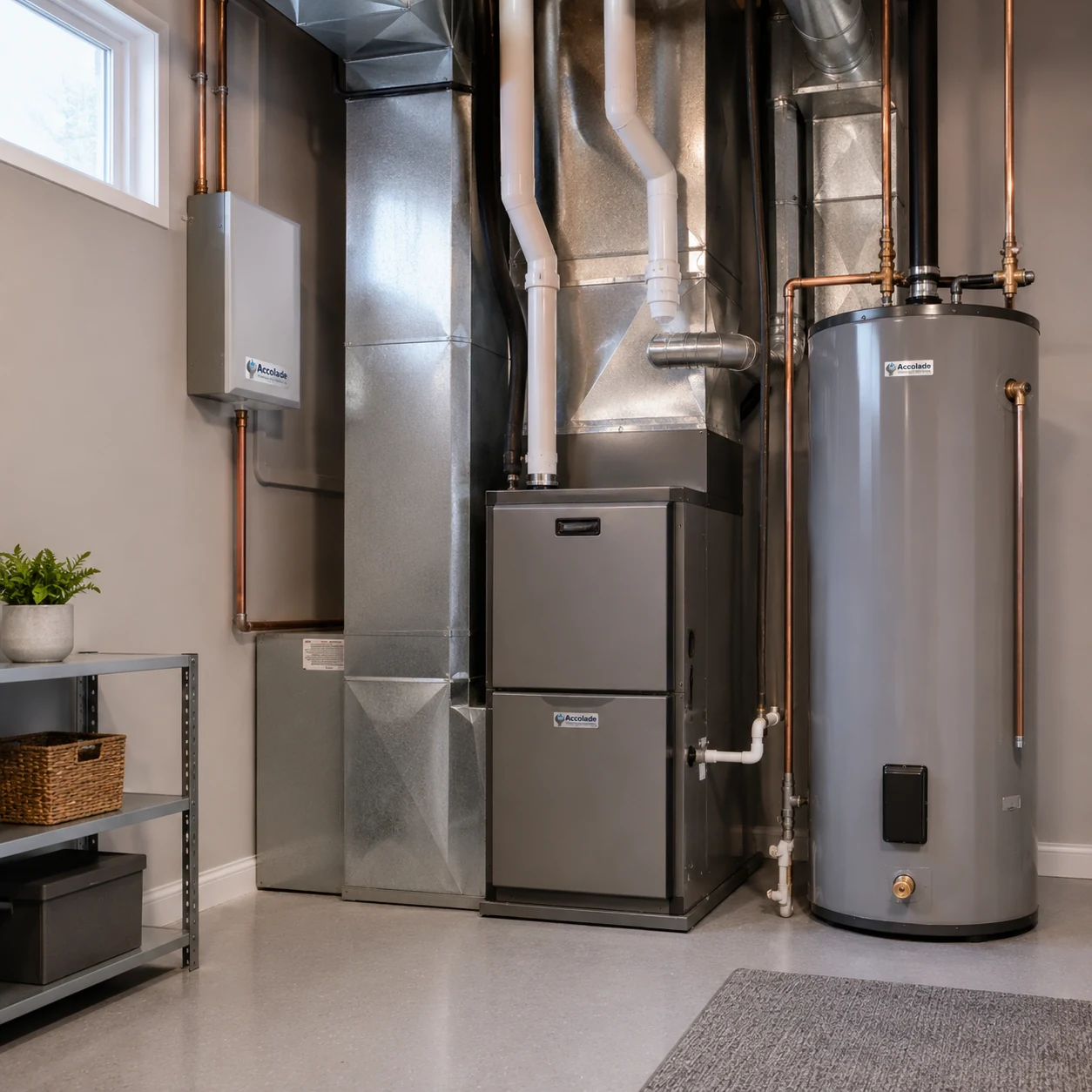
Tankless can provide long-duration hot water and reclaim floor space, but it is not automatically the lowest-cost or best-performing option for every household.
The figures are broad 2026 Surrey and British Columbia market-planning ranges compiled from publicly available contractor, retailer and marketplace guides. They are provided to answer early budgeting questions and should not be represented as Accolade's completed-job average until internal job data supports that claim.
It can be enough for some straightforward replacements, but a first-time conversion usually requires additional venting, condensate, gas and electrical work.
The project may need a new wall location, larger gas line, dedicated vent system, condensate drain, electrical receptacle and changes to the water piping.
No. The required temperature rise, simultaneous fixtures, gas input, venting and minimum activation flow all affect real performance.
It should state whether permits and inspections are included. Do not assume they are included unless the written quote says so.
Not necessarily. Savings depend on the old system, hot-water use, fuel prices, equipment efficiency and maintenance. Avoid guaranteed savings claims without household-specific data.
Share the current water heater, household size, bathroom count, gas service, utility-room location and any recirculation needs. Accolade can determine what must be inspected before issuing a project-specific quote.