
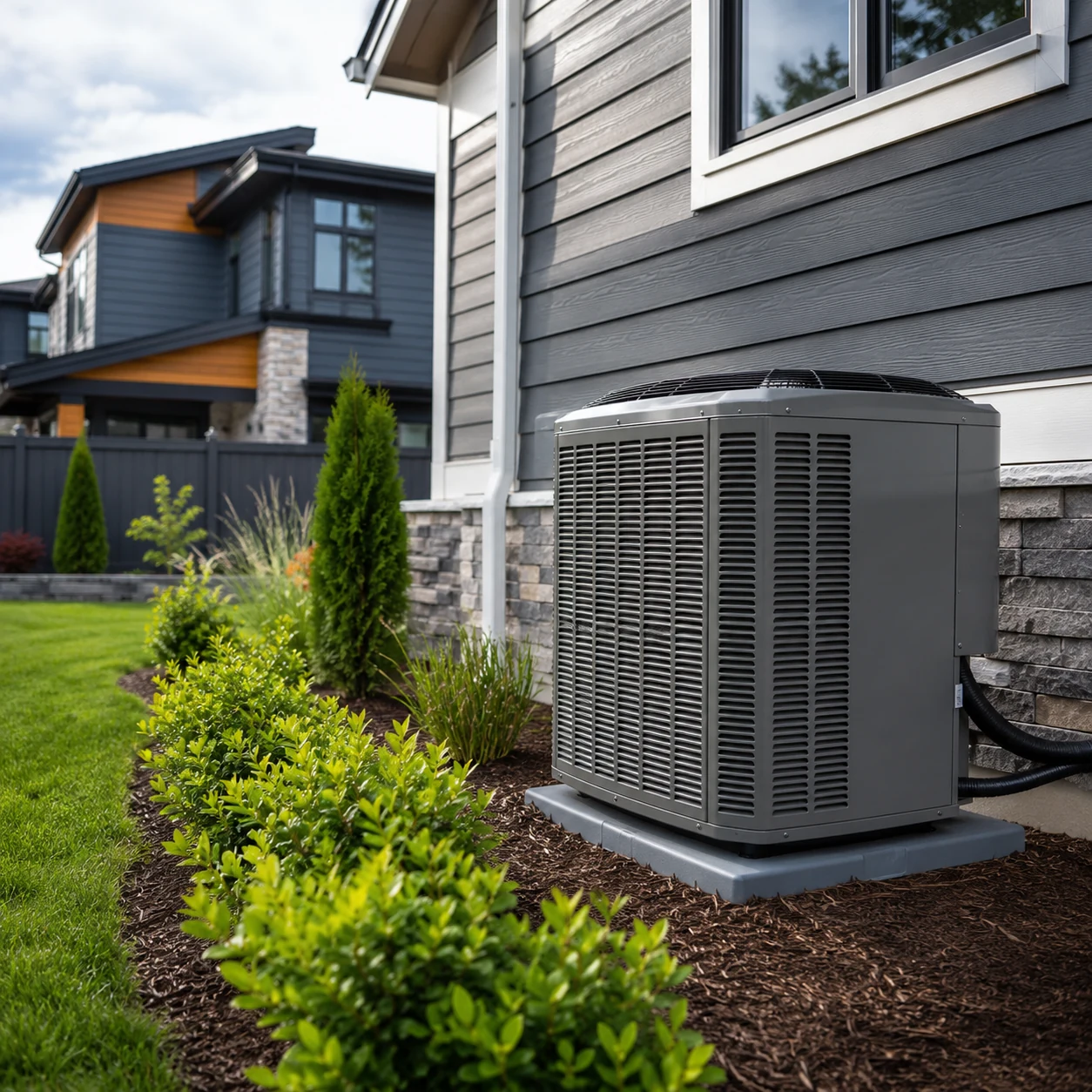
Diagnostic or service call
The technician identifies the fault, checks relevant electrical and cooling functions, and explains the repair scope.
- Confirm the fee before booking
- Repair-credit policy may vary
- After-hours pricing may differ
A residential AC repair usually starts with a diagnostic visit. Common electrical or control repairs may remain in the lower hundreds, while refrigerant leaks, motors, coils or compressors can move the total into four figures.
Accolade Heating services permanently installed residential cooling systems, including central air conditioners, ductless mini-splits and heat pumps.
We do not repair portable, freestanding or window air-conditioning units.
These ranges reflect common Metro Vancouver market pricing. Accolade should confirm its diagnostic fee and provide the exact repair price after testing the system.
The technician identifies the fault, checks relevant electrical and cooling functions, and explains the repair scope.
Common lower-cost work can include capacitors, contactors, thermostat issues, drain clearing or minor wiring corrections.
Fan motors, blower components, leak detection, refrigerant work and more involved controls often fall in this range.
Large sealed-system components can cost enough to justify comparing repair with complete equipment replacement.
| Cost factor | Lower-cost situation | Higher-cost situation |
|---|---|---|
| Failure type | Capacitor, contactor, thermostat or drain issue | Motor, refrigerant leak, coil or compressor failure |
| Refrigerant | Modern refrigerant with a small verified correction | Leak repair, large charge or older/phased-down refrigerant |
| Warranty | Part remains covered and documentation is available | Expired warranty or labour/refrigerant not covered |
| Access | Open outdoor and mechanical-room access | Roof, crawlspace, finished enclosure or strata restrictions |
| Timing | Scheduled weekday appointment | Heat-event demand, evening, weekend or urgent attendance |
| System age | Newer equipment with stocked parts | Older unit, obsolete controls or multiple worn components |
The cause may be a capacitor, contactor, disconnect, thermostat signal, control board or compressor issue.
Dirty coils, restricted airflow, refrigerant loss, duct issues or compressor performance may need testing.
Frozen equipment can result from low airflow, a dirty filter, a blower problem or a refrigerant issue. Repeated operation may cause more damage.
Drain blockage, pump failure, pan damage or coil icing can cause leakage. Electrical areas should be protected until inspected.
A modest electrical repair can make sense on an otherwise sound unit. A major sealed-system repair on older equipment may not.
The figures are broad 2026 Metro Vancouver planning ranges compiled from current local and Canadian public pricing guides. They should not be represented as Accolade’s completed-job average until internal invoice data supports that claim.
Current Metro Vancouver public ranges commonly sit around $100 to $200. Confirm the fee, after-hours policy and whether any amount is credited toward an approved repair.
Low refrigerant normally indicates leakage or another service issue. The technician should explain whether leak detection and repair are needed before adding refrigerant.
The compressor is a major sealed-system component. Replacement can involve significant labour, refrigerant handling, testing and system-specific parts.
Usually not for an unknown failure. A phone call can confirm the diagnostic fee and possible range, but exact repair pricing generally requires onsite testing.
Compare replacement when the repair is substantial, the equipment is older, refrigerant or parts are difficult to source, or other major components are also deteriorating.
Share the system type, approximate age, symptoms, error information, recent work and whether the issue is urgent. Accolade can schedule the diagnostic step needed before an exact repair is approved.