
There is no single perfect thermostat number for every BC home. The right setting depends on your heating system, insulation, occupancy, health and comfort needs. The most important distinction is what type of heating equipment you have: a gas furnace or electric-resistance system can usually use scheduled setbacks, while a heat pump often performs better with a steadier setpoint.
For a furnace, use moderate scheduled setbacks
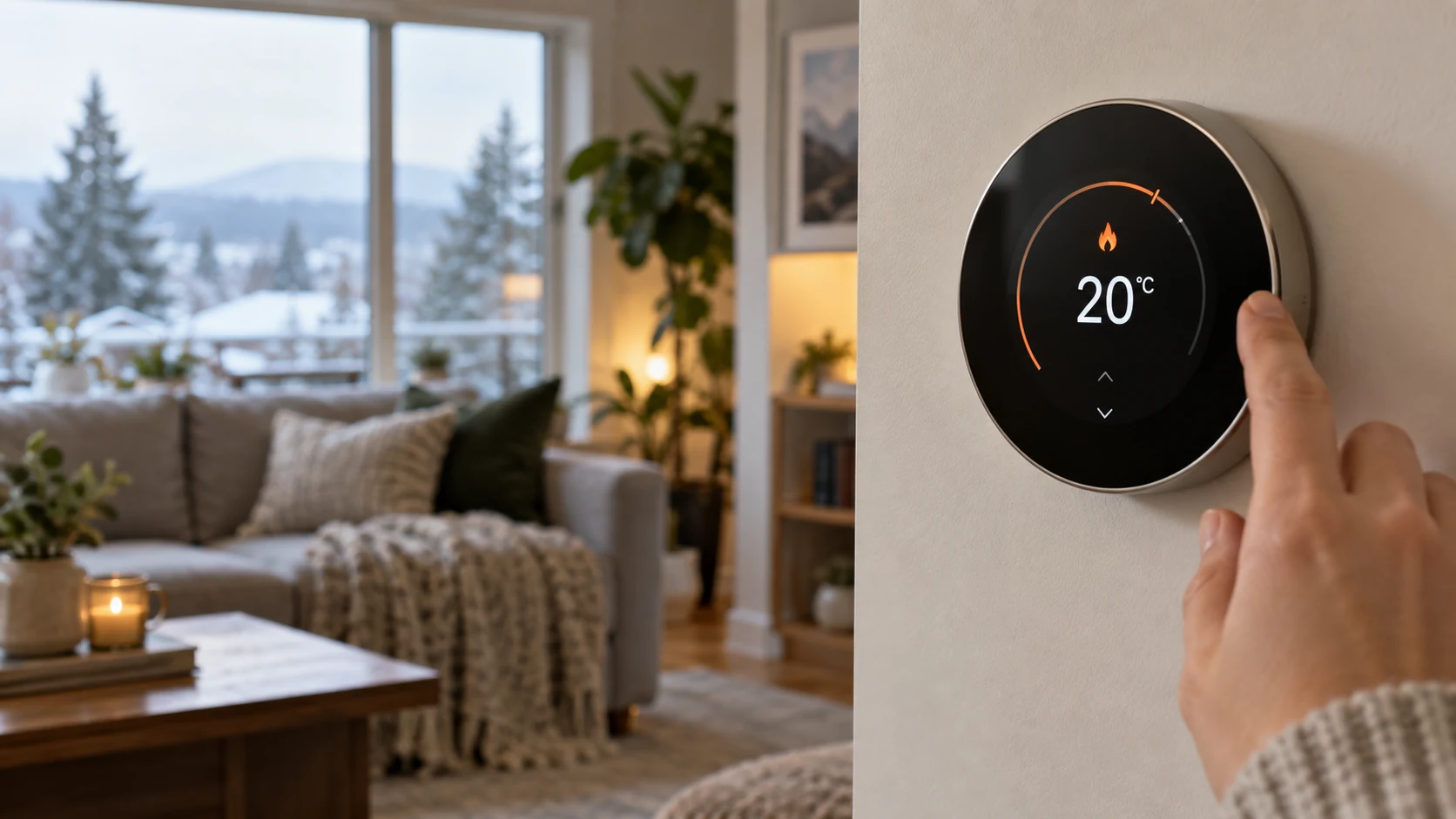
FortisBC commonly recommends programming a thermostat to about 20°C when you are home and awake and 17°C when you are out or asleep. That is a practical starting point for many homes heated by a conventional furnace, although some households will prefer a slightly warmer or cooler setting.
The goal is not to make the house uncomfortable. It is to avoid heating an empty home to the same temperature you use while relaxing in the living room. A programmable or connected thermostat can handle these changes automatically.
Large temperature swings are usually unnecessary. Cranking the thermostat far above your preferred temperature does not make a standard furnace heat the house “harder” or meaningfully faster; it simply tells the system to keep heating for longer.
For a heat pump, think “steady” rather than “deep setback”
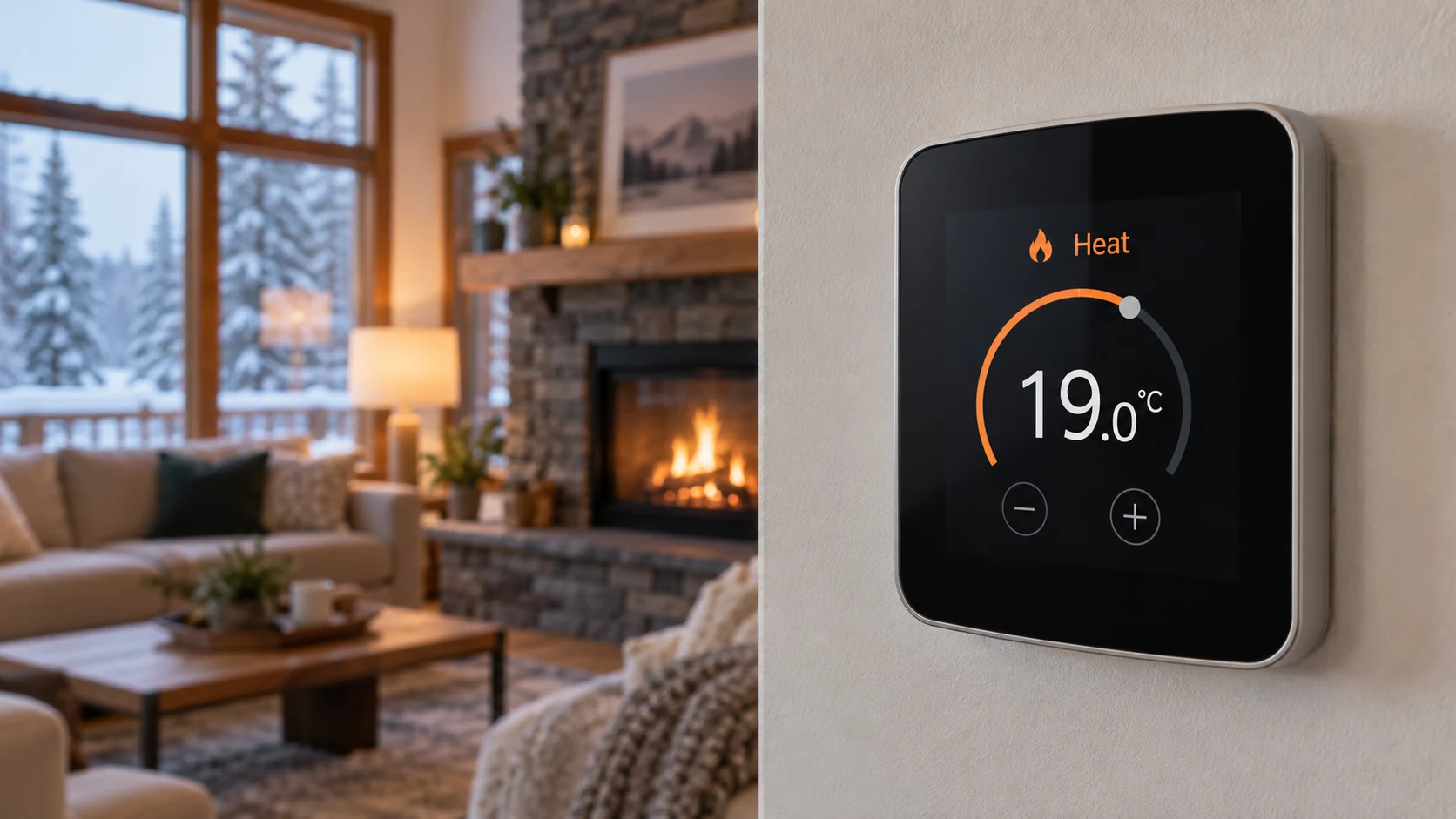
Heat pumps are different. BC Hydro advises heat-pump users to find a comfortable setting and minimize frequent adjustments — often described as “set it and forget it.” In winter, use Heat mode rather than Auto so the system does not unnecessarily switch between heating and cooling.
FortisBC also cautions that with a heat pump and backup heat source, a large temperature recovery can bring the backup heat on. If the room temperature falls well below the setpoint, the control system may decide it needs extra heating capacity. Depending on the system, that backup source can use more energy than normal heat-pump operation.
For many Lower Mainland homes, a steady setting somewhere in the high teens to around 20°C is a reasonable comfort range to experiment within. Your installer’s setup, thermostat programming and equipment manual should take priority over a generic number.
A simple thermostat plan by heating system
Use these as starting points, not hard rules:
- Gas furnace / conventional forced air: around 20°C when home and awake; around 17°C when sleeping or away, if comfortable.
- Heat pump: choose a comfortable steady setpoint and minimize large setbacks; many homes land somewhere around 17–20°C.
- Dual-fuel heat pump + furnace: follow the installer’s thermostat and switchover settings. Do not make large manual changes that defeat the control strategy.
- Electric baseboard or resistance heating: setbacks can save energy when spaces are unoccupied, but avoid temperatures so low that comfort, moisture control or pipe-freezing risk becomes a concern.

What should you set the thermostat to at night?
If you heat with a furnace, lowering the setpoint for sleep can reduce heating demand, provided everyone remains comfortable. FortisBC’s common guidance uses 17°C when sleeping or away.
With a heat pump, the better approach is often a small change—or no setback—rather than dropping the temperature several degrees and asking the system to recover quickly in the morning. If you want a cooler bedroom, experiment in small increments and watch whether auxiliary or backup heat begins running during recovery.
What about when nobody is home during the day?
For a furnace, a programmed setback during a workday or school day can make sense. For a heat pump, the answer depends on how long the house will be empty, how quickly it loses heat and how the backup heating is configured. A modest setback may be reasonable, but repeatedly turning the system fully off and then demanding a large recovery is usually not the best operating pattern.
If you are leaving for several days in winter, do not simply turn all heat off. Maintain enough heat to protect the building and plumbing, and follow your insurer, property-manager or building requirements where applicable.
Do smart thermostats automatically save energy?
A smart thermostat can make scheduling easier, but the device only works as well as the settings and equipment configuration behind it. A thermostat that was set up for a furnace may need different programming after a heat-pump conversion. Likewise, aggressive “eco” setbacks may not be appropriate if they repeatedly trigger backup heat.
If the thermostat was recently changed and the home now has uneven temperature, frequent cycling or unexplained backup heat, the system may need control review rather than another round of schedule changes.
Thermostat mistakes that increase winter energy use
- Setting the temperature much higher because the house feels cold. It does not make most systems heat faster.
- Using Auto mode on a heat pump through winter when Heat mode is more appropriate.
- Making large heat-pump setbacks and rapid morning recoveries that trigger backup heat.
- Blocking the thermostat with furniture, placing heat-producing devices nearby or allowing direct sun to distort its reading.
- Ignoring a dirty furnace or heat-pump filter while trying to solve comfort problems through thermostat settings.
When thermostat settings are not the real problem
If you keep adjusting the thermostat but some rooms remain cold, the heating system may be dealing with restricted airflow, duct imbalance, heat loss, insulation gaps, an equipment problem or poor system sizing. A thermostat cannot compensate for a mechanical issue indefinitely.
For a system that is running but struggling to maintain a normal setpoint, use the appropriate service route: furnace repair, heat-pump repair or general HVAC maintenance.
Fall is the best time to test your winter schedule
Do not wait until the coldest week of the year to experiment with thermostat programming. During mild fall weather, test your schedule for several days. Note comfort in bedrooms and main living areas, watch how often the system runs and make small changes rather than jumping several degrees at a time.
For heat pumps, this is also a good time to confirm the thermostat is actually in Heat mode and that backup heating settings have not been changed accidentally.
Final takeaway
For many BC homes with a furnace, 20°C when home and awake and 17°C when sleeping or away is a practical starting point. Heat pumps should generally be treated differently: choose a comfortable steady setting and avoid large temperature setbacks. The best thermostat strategy is the one that matches the equipment and keeps the home comfortable without forcing the system into inefficient recovery cycles.
If your thermostat settings seem reasonable but the home still will not heat evenly, contact Accolade Heating & Air Conditioning for service in Surrey, Delta and the Lower Mainland.
Frequently Asked Questions
What is the best thermostat temperature for winter in BC?
For a conventional furnace, about 20°C while home and awake is a practical starting point, with a lower setting when asleep or away. For a heat pump, focus more on a steady comfortable setpoint than on large scheduled changes.
Is 17°C too cold for a house in winter?
Seventeen degrees can be a reasonable sleeping or away temperature for some households, but comfort and individual needs vary. Older adults, infants and people with health conditions may need warmer indoor temperatures. Building and plumbing conditions also matter during prolonged cold weather.
Should I turn my heat pump down at night?
A small adjustment may be fine, but avoid a deep setback unless your installer or control strategy supports it. A large morning recovery can trigger backup heating and reduce the efficiency benefit you were trying to gain.
Should a heat pump thermostat be on Auto in winter?
BC Hydro recommends using Heat mode in winter rather than Auto. Auto mode can allow the system to decide between heating and cooling, which is not usually necessary during the heating season.
Why is my heating system running even though the thermostat reached the setpoint?
Some systems continue the fan briefly after the heating call ends, and variable-speed heat pumps may run at low output for long periods. If operation seems abnormal, the home is overheating, or the system never reaches the setpoint, have the controls and equipment checked.