
An outdoor heat pump is designed to operate through winter weather, so “winterizing” it does not mean wrapping or covering the unit. The goal is the opposite: keep the outdoor coil, fan area and drainage path open so the system can move air and complete normal defrost cycles.
1. Clear leaves and debris before the wet season settles in
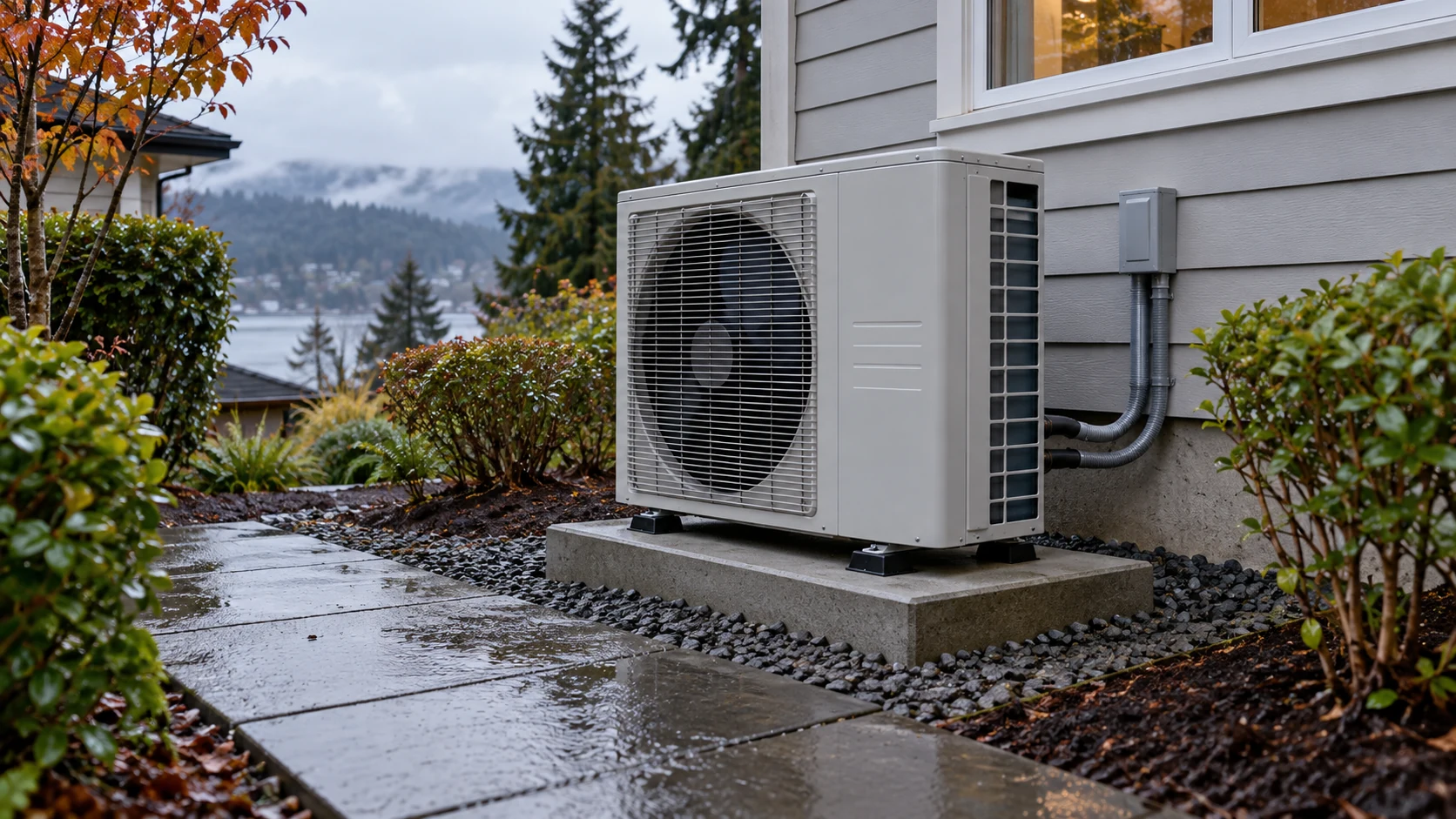
Fall leaves, grass clippings, seed pods and windblown debris can collect around the outdoor coil and base. BC Hydro recommends checking the outdoor unit at the start of every season and clearing dirt, debris, snow, ice and dripping water that restrict airflow.
Start with the simple work you can do safely from outside the equipment: pick up loose leaves around the cabinet and remove objects that have been stored beside it. Do not push tools into the coil, fan guard or internal components.
2. Give the outdoor unit room to breathe
A heat pump extracts heat from outdoor air in winter, so it needs unrestricted airflow through the coil. Shrubs, tall grass, temporary fencing, patio furniture and storage bins can gradually crowd a unit that was clear when it was installed.
Use the manufacturer’s clearance requirements rather than a generic distance. If landscaping has grown into the required space, trim it back before winter. If the unit was installed in a tight enclosure and airflow has always been limited, that is an installation issue to discuss with a professional rather than something to fix with improvised ducting or screens.
3. Do not put a winter cover over the heat pump
A central air conditioner can sometimes be protected differently during its off-season because it is not operating. A heat pump is an active winter appliance. Covering the cabinet or coil can block airflow and prevent normal operation.
If you are concerned about roof runoff, icicles or heavy snow falling directly from above, ask an installer whether a manufacturer-compatible shelter or deflector is appropriate for the site. Any protective structure must preserve the required airflow and service access.
4. Plan for snow clearance before the first snowfall
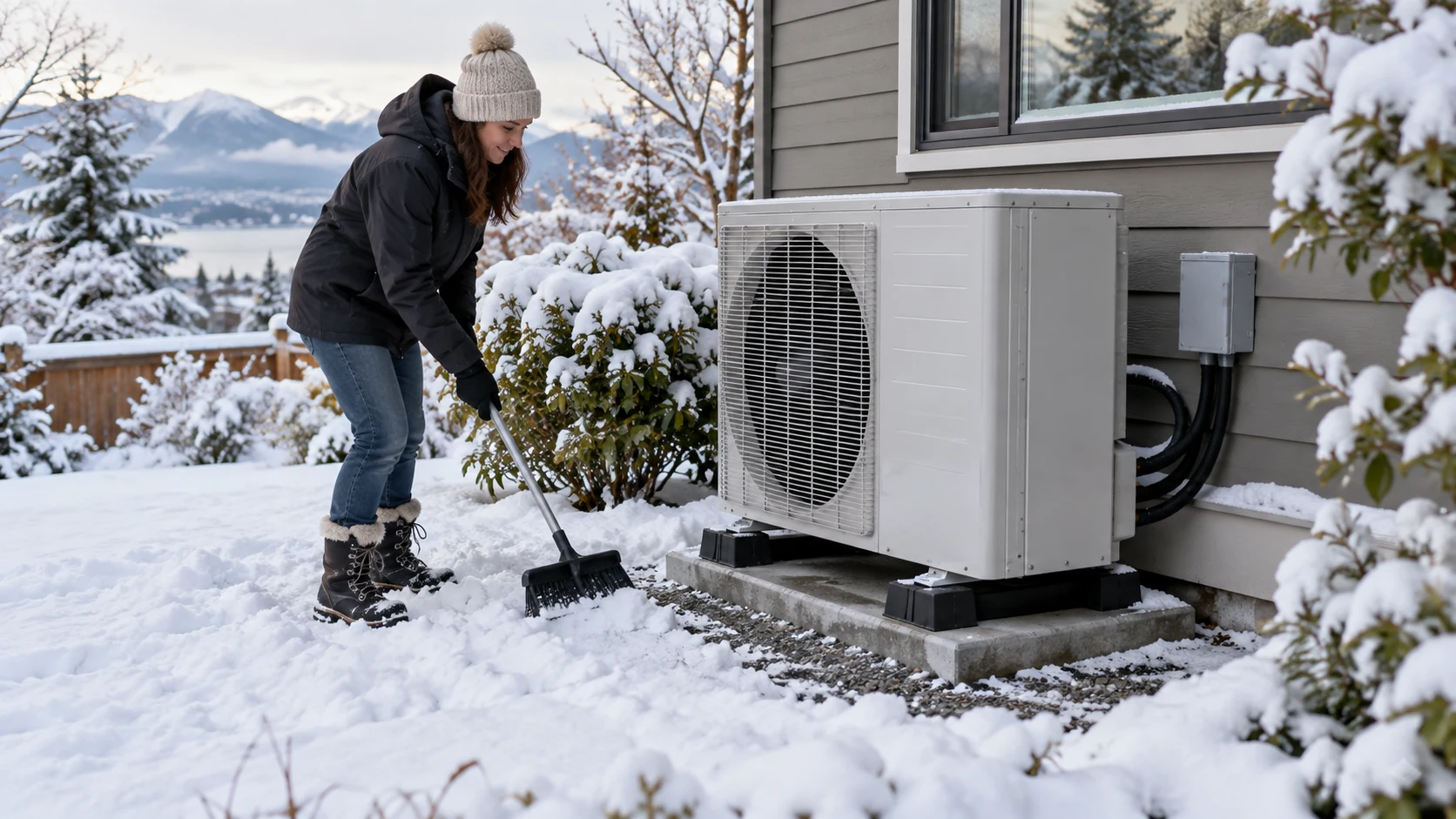
In the Lower Mainland, deep snow is not constant, but a single storm can still pack snow around an outdoor unit. Keep a clear path to the equipment so it can be checked safely after a snowfall. Remove loose snow from around the cabinet and from the area where the unit needs to draw and discharge air.
Use a soft brush or your hands for loose snow when it is safe to do so. Avoid shovels, sharp tools or force against the thin coil fins. Do not stack shoveled snow against the unit.
5. Make sure defrost water has somewhere to go
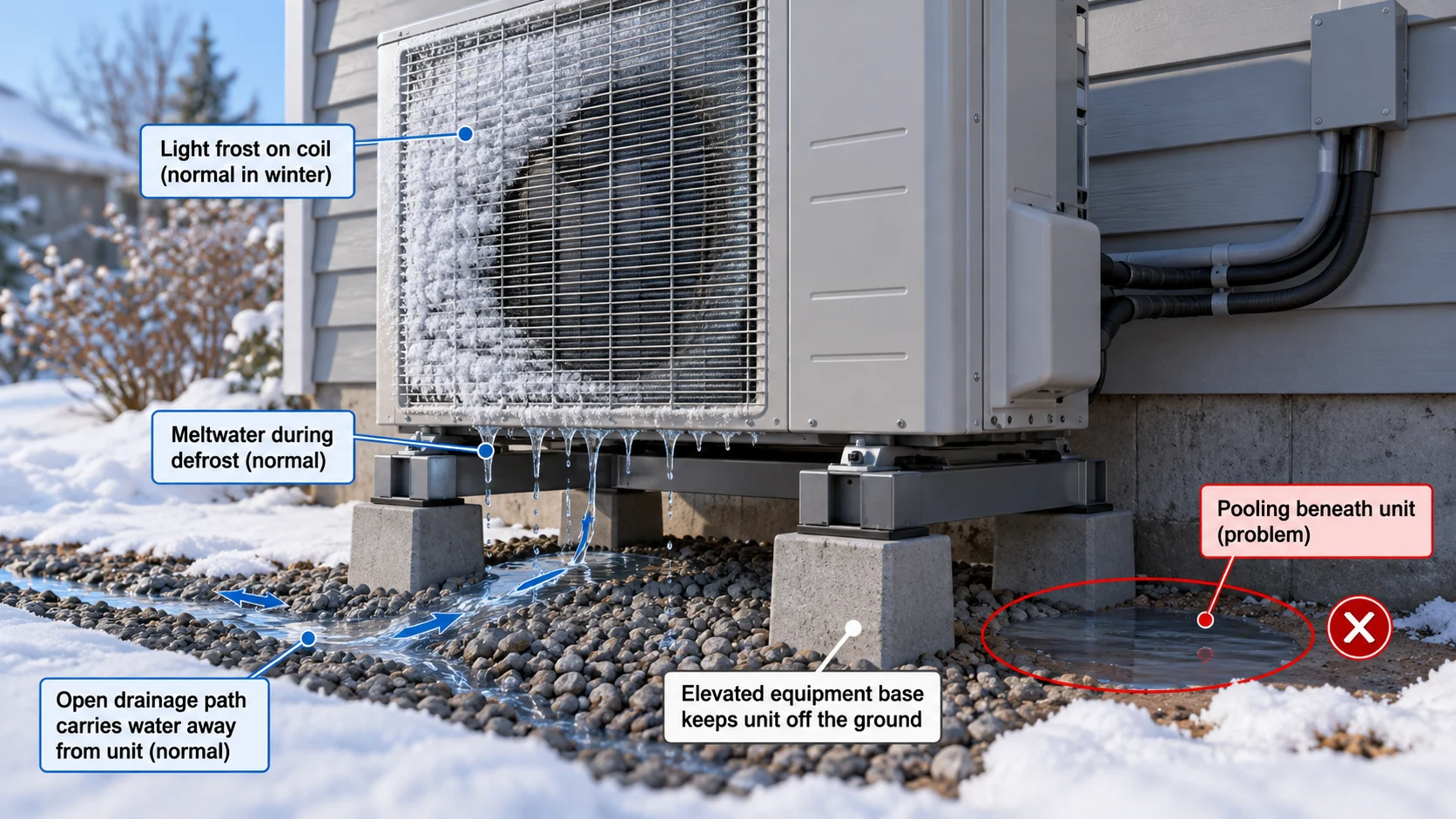
A heat pump periodically defrosts its outdoor coil in cold, damp weather. That creates water, which needs to drain away from the base. In the Lower Mainland’s wet winter climate, repeated freeze-thaw conditions can create ice around poorly drained equipment.
Before winter, look at the area under and around the unit. The base should not be buried in soil, leaves or landscaping material. If water routinely pools and freezes around the unit, ask an HVAC professional whether the installation, base or drainage needs correction.
6. Expect some frost — but not a solid block of ice
A light coating of frost on the outdoor coil can be normal before a defrost cycle. The system should periodically clear it. During defrost, you may see water or vapour and hear the operating sound change.
A coil that remains heavily iced, ice that repeatedly builds into the fan area, or a unit that cannot clear frost is different. Possible causes include airflow problems, drainage issues, sensor or control faults, refrigerant-related problems or another condition requiring diagnosis.
7. Do not attack ice with tools or boiling water
Heat-pump coil fins are thin and easy to damage. Chipping ice with a screwdriver, scraper or shovel can bend fins, puncture tubing or damage the fan. Pouring boiling water over a frozen unit can create thermal stress and more ice as water refreezes.
If ice is substantial enough that normal defrost is not clearing it, stop treating it as a snow-removal task and arrange heat-pump repair.
8. Check the line-set insulation you can see
Most air-source heat pumps have refrigerant lines running between the outdoor and indoor equipment. One line is typically insulated. From outside, you can look for insulation that is visibly missing, split, chewed or badly weathered.
Do not open refrigerant connections or attempt to recharge the system. Damaged line insulation can be evaluated and replaced as part of professional maintenance.
9. Listen to the outdoor unit before winter becomes demanding
Turn the heat pump on during a cool fall day and spend a few minutes near the outdoor unit. Normal compressor and fan sounds vary by model, but new scraping, grinding, repeated hard starts or strong vibration deserve attention. The unit should not rock on its base or have loose objects touching the cabinet.
10. Pair outdoor preparation with indoor maintenance
Outdoor airflow is only half of the heat-pump equation. Check or clean indoor filters according to the manufacturer’s instructions, keep indoor heads or return grilles unobstructed and confirm the thermostat is set to Heat for winter. BC Hydro also recommends regular professional maintenance, commonly every one to two years depending on the system and guidance provided.
If your heat pump is due, schedule heat-pump maintenance before sustained cold weather. A technician can inspect components and operating conditions that are not appropriate for homeowner DIY work.
What not to do to an outdoor heat pump in winter
- Do not wrap or cover the operating outdoor unit.
- Do not build a tight box around it to “keep it warm.”
- Do not use a pressure washer on the coil.
- Do not chip coil ice with metal tools.
- Do not block drainage with landscaping, snow piles or storage.
- Do not change refrigerant, electrical or installer-level controls yourself.
Why winter preparation matters in the Lower Mainland
BC winter preparation is not only about deep snow. Surrey and Delta also get long periods of rain, damp air and temperatures hovering near freezing. Those conditions can mean frequent frost and defrost cycles. Good airflow and drainage help the outdoor unit handle that weather the way it was designed to.
If you are deciding whether your system is suitable for cold weather more broadly, see Do heat pumps Work in Surrey Winters?. This article stays focused on preparing the outdoor unit rather than duplicating that topic.
Final takeaway
Preparing an outdoor heat pump for winter is mostly about keeping it open, clear and drainable. Remove debris, preserve airflow, plan for snow, watch how defrost water drains and leave persistent ice or mechanical problems to a professional.
Accolade Heating & Air Conditioning provides heat-pump maintenance and repair service for homeowners in Surrey, Delta and the Lower Mainland. Contact Accolade if your outdoor unit needs attention before winter.
Frequently Asked Questions
Should I cover my outdoor heat pump in winter?
No. A heat pump needs to move outdoor air while it heats the home. A cover can restrict airflow and interfere with operation. If falling ice or roof runoff is a concern, ask an installer about a suitable protective solution that preserves manufacturer clearances.
How much snow should I clear around a heat pump?
Follow the manufacturer’s required clearances and keep the air intake, discharge and base free of packed snow. Do not pile shoveled snow against the unit. Use gentle methods that will not bend coil fins or damage the cabinet.
Is ice on an outdoor heat pump normal?
A light layer of frost can be normal before the system enters defrost. Heavy ice that does not clear, repeatedly blocks the fan or returns quickly can indicate a problem that needs diagnosis.
Can I pour hot water on a frozen heat pump?
It is better not to use boiling or very hot water as a de-icing method. It can damage components and may refreeze around the unit. If normal defrost cannot clear the ice, arrange professional service.
How often should a heat pump be serviced?
Use the manufacturer’s maintenance schedule and your installer’s guidance. BC Hydro commonly recommends regular professional maintenance every one to two years, along with homeowner filter cleaning and outdoor-unit checks between visits.