
Snow and freezing weather do not automatically mean a heat pump is in trouble. Outdoor units are designed to operate through winter, but they still need open airflow, a clear base and somewhere for defrost water to drain.
The homeowner’s job is mostly observational: keep the area around the unit clear, watch for conditions that restrict airflow or drainage, and know the difference between normal frost and persistent heavy icing.
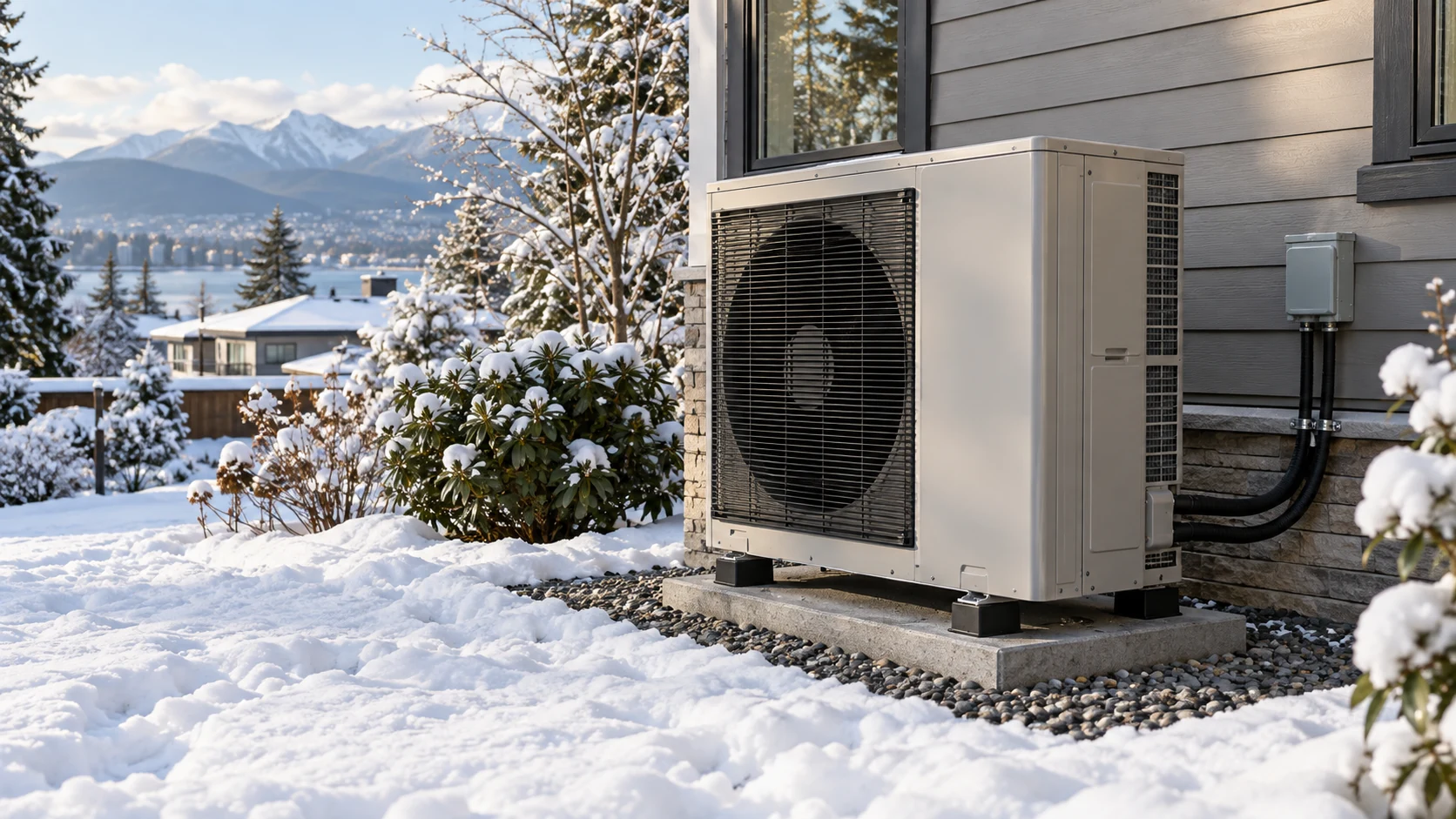
1. Check the snow clearance around the cabinet
After a snowfall, look at the outdoor unit before snow becomes packed or frozen in place. The intake and discharge areas need room to move air, and the base should not be buried under snow pushed from a walkway or driveway.
- Keep loose snow away from the coil and fan area.
- Do not pile shoveled snow against the outdoor unit.
- Maintain the manufacturer’s required clearances rather than relying on a generic distance.
- Keep a safe path to the equipment so it can be inspected without climbing through deep or icy snow.
Use gentle methods for loose snow. Avoid striking the cabinet, coil or fan guard with a shovel or other hard tool.
2. Know the difference between normal frost and problematic ice
In cool, damp weather, frost can form on the outdoor coil. That does not automatically mean the system is failing. Heat pumps periodically enter a defrost cycle to warm the coil and melt frost.
A light frost layer that clears during defrost, a temporary change in operating sound, meltwater below the unit and a short cloud of water vapour can all be normal.
Heavy ice that remains after repeated operation is different. Ice that builds into the fan area, repeatedly returns quickly or prevents the fan from moving normally should be evaluated through heat-pump repair.

3. Check what happens to defrost water
Defrost produces water. In the Lower Mainland, repeated wet weather and temperatures near freezing can turn poor drainage into an ice problem around the equipment base.
Look for water that pools under the unit, refreezes into a thick slab, blocks drainage openings or creates a recurring icy area around the cabinet. The base should remain stable and should not be buried in leaves, soil, landscaping material or frozen debris.
If drainage repeatedly freezes around the equipment, a heat-pump maintenance visit can help determine whether the installation or drainage arrangement needs attention.
4. Look above the unit for roof runoff, icicles and snow shedding
A heat pump can have perfect ground clearance and still be affected from above. Roof edges, gutters, downspouts and valleys can direct water or falling snow toward the equipment.
Watch for dripping water that freezes on the cabinet, long icicles directly above the fan or coil, or roof snow that repeatedly drops into the unit’s working clearance.
The equipment still needs unrestricted airflow. If overhead protection is appropriate, it should be compatible with the manufacturer’s clearance requirements and should preserve service access.

5. Make sure the fan area remains unobstructed
Snow, ice, leaves and windblown debris should not interfere with the outdoor fan. If the fan is visibly blocked, do not force it to move or push objects through the grille.
A fan that repeatedly strikes ice, makes a new scraping sound or stops while the system is trying to heat may indicate a condition that needs professional diagnosis.
What not to do around a frozen heat pump
- Do not chip coil ice with a screwdriver, scraper or shovel.
- Do not pour boiling water over the coil or fan area.
- Do not wrap or tightly cover an operating heat pump.
- Do not block the base with snow piles or stored items.
- Do not change refrigerant, electrical or installer-level controls yourself.
When snow or ice becomes a service problem
Arrange professional attention when the unit cannot maintain indoor temperature, heavy ice does not clear, the fan is obstructed, drainage repeatedly refreezes, the cabinet is being struck by roof ice or snow, or new mechanical/electrical sounds appear.
These conditions are better handled through heat-pump repair than repeated homeowner de-icing attempts.
Winter readiness is mostly about airflow, drainage and observation.
Keep snow away from the cabinet, let normal defrost do its job, make sure meltwater has somewhere to go, and watch what happens above the unit as well as around the base. Persistent heavy ice, blocked fans and recurring drainage problems deserve professional attention.
For broader cold-weather performance questions, see Do Heat Pumps Work in Surrey Winters?.
Frequently Asked Questions
How much snow should I clear around a heat pump?
Keep the intake, discharge and base free of packed snow and follow the manufacturer’s required clearances. Do not pile shoveled snow against the cabinet or push tools into the coil.
Is frost on a heat pump normal in winter?
A light layer of frost can be normal before a defrost cycle. Heavy ice that does not clear, blocks the fan or quickly returns is different and should be diagnosed.
Can I chip ice off a heat pump?
No. Sharp tools can damage coil fins, tubing and the fan. If normal defrost is not clearing heavy ice, treat it as a service issue rather than a snow-removal task.
Should I cover my heat pump before snow?
No. An operating heat pump needs open airflow through the outdoor coil. Any roof-runoff or snow-shedding protection should preserve manufacturer clearances and service access.
Is steam from a heat pump during winter normal?
A temporary cloud of water vapour can appear during defrost as frost melts from the outdoor coil. It should be brief and should not be confused with smoke.